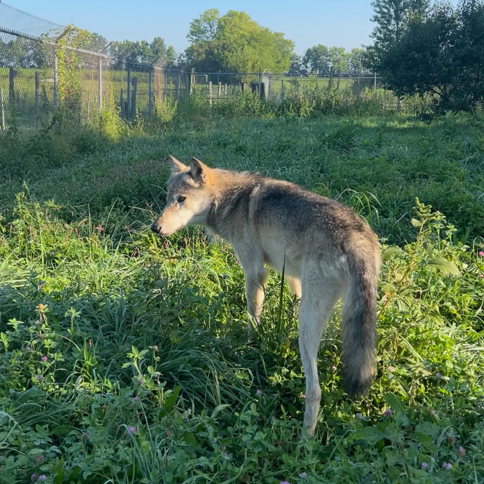
I officially hit my 30-day mark at Wolf Park, and somehow, my daily tasks and habitat rotations are finally starting to feel natural.
When I first arrived, there was so much to learn. Every animal has their own routine, every habitat has its own quirks, and there is always something that needs to be cleaned, checked, prepared, or observed. Now, I’m starting to move through my days with more confidence. I know where I’m going. I know what needs to be done. And most importantly, I’m beginning to build relationships with the animals.
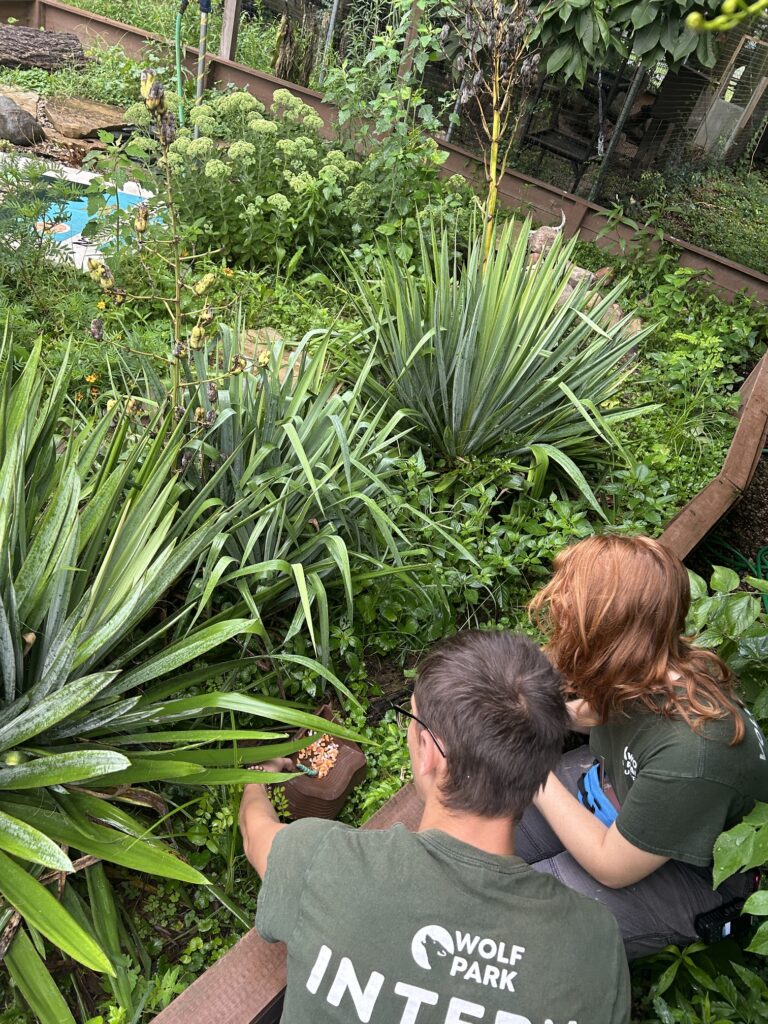
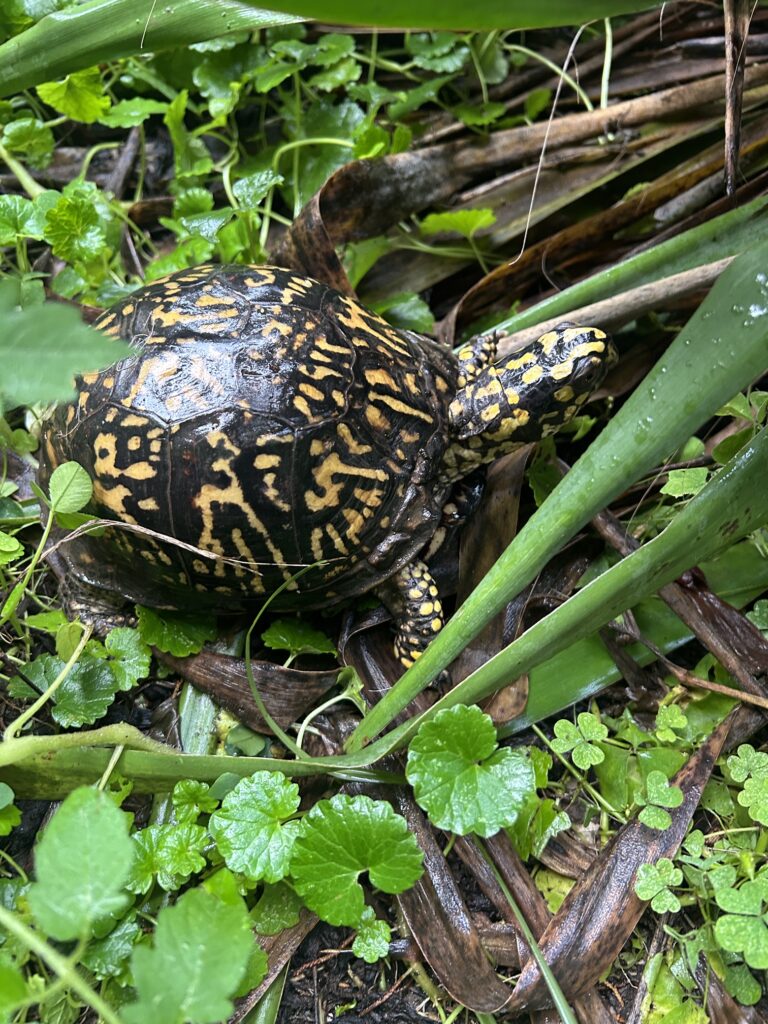
If I’m assigned to animal care, I usually start my morning by checking on Clementine, our Eastern box turtle.
Clem gets to enjoy her outdoor habitat overnight as long as temperatures stay above 60 degrees, so my morning starts with taking multiple temperature readings throughout her habitat and checking her temperature as well. Today, I found her tucked away in the yucca plants again. She absolutely loves those plants.
After watching one of our care coordinators hand-feed her worms, we saw Clementine drag one of the worms straight back to her yucca dwelling. Lol. Apparently, she wanted to enjoy her breakfast at home.
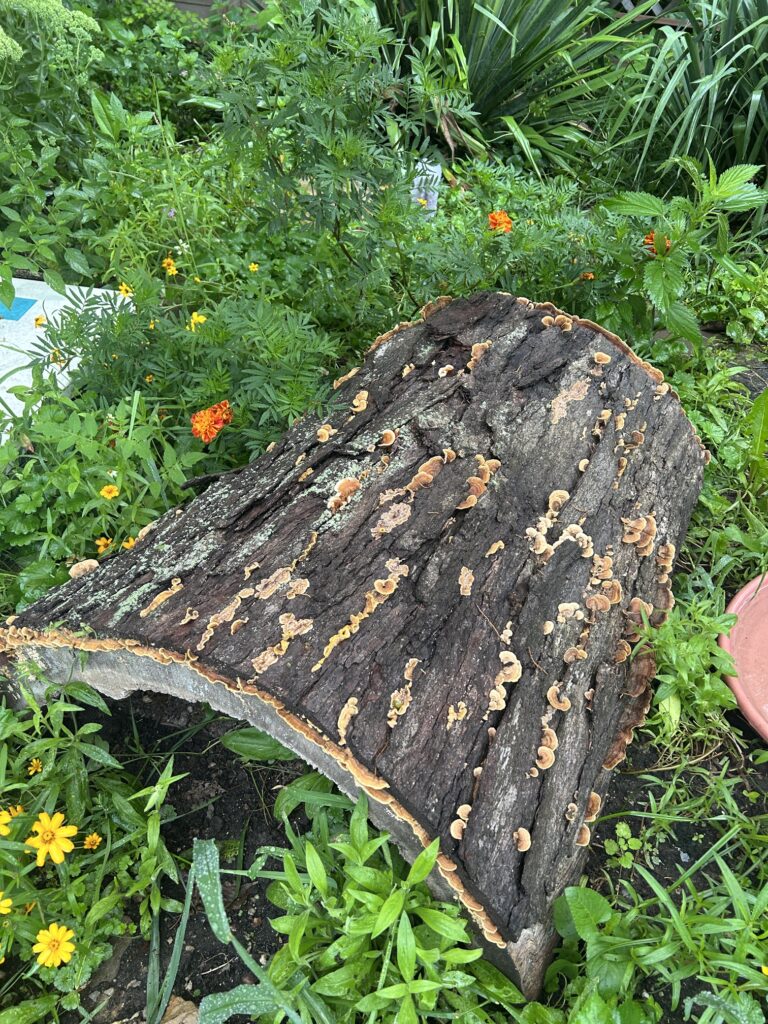
There’s also always a critter or two enjoying Clem’s habitat. Sometimes I have to scare away a chipmunk that is trying to steal the berries we leave out for her. Yesterday, I spotted a tiny brown frog sitting on one of the yucca leaves and a small lizard with a bright blue tail running across one of the fungus-covered logs.
After checking on Clem, it’s time for wolf and bison welfare checks.
I walk to each wolf habitat, observe the animals, and give them their daily meatballs. Feeding them is becoming much more natural now, and I’d like to think some of them are starting to see me as a friend. But because my shifts don’t always involve seeing every wolf every day, I’m still working on building those relationships.
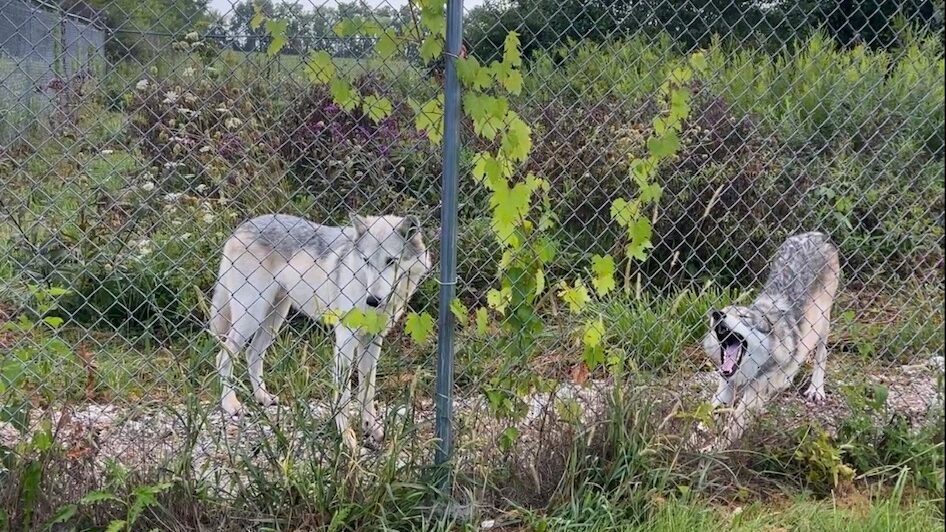
Clay and Cricket are probably the rowdiest. They are also the youngest wolves at three years old, so that may have something to do with it. Usually, if you feed them far enough apart, they are perfectly fine. But every now and then, Clay likes to boss his brother around.
Then there are Mani and Aspen, two nine-year-old brothers. Mani has this adorable bedhead-like scruff around his neck and a tiny mole near his nose. Aspen has a much cleaner look. Both have beautiful agouti brown-and-white coats.
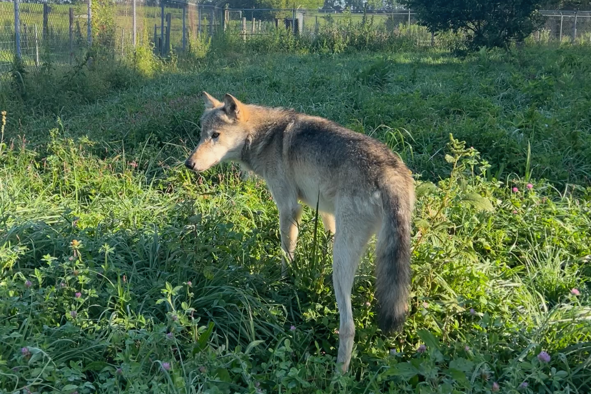
Agouti means that each strand of fur contains two or three different bands of color. It’s what gives wolves that sandy, multicolored appearance that makes their coats look so different depending on the lighting.
I recently did a few “touch” hand targets with Mani, and he was so sweet and gentle. He completed the exercise very well and gave my hand a lick instead of the nose boop we are looking for. Close enough! Hopefully, he gives me a proper boop next time.
After their meatballs, Mani and Aspen usually start howling to greet their neighbors and communicate with the wolves across the park. Before long, everyone starts chiming in.
It is still one of my favorite things to experience.
Sometimes, you can actually tell who is howling just by the way they communicate. Each wolf has their own style, and the more time I spend here, the more I am starting to recognize those differences.
Walking through the gated back areas between habitats comes with its own challenges. Unfortunately, that usually means walking directly into a spiderweb or having a couple of flies bounce off your face.
The fox habitats are probably the worst. The spiders apparently work overtime overnight because there are always new webs waiting for you in the morning.
The struggle is real.
After the wolves receive their meatballs, I walk over to the bison pasture to make sure I can count 10 large brown lumps in the field.
Sometimes, that is easier said than done.
They really morph together, and it can be surprisingly tricky to make sure all 10 are accounted for. The other day, during a tour, the herd was standing right next to one of the fences, and honestly, it shocked me a little.
Bison are intimidating, at least to me!
They can weigh anywhere from approximately 900 to 2,200 pounds and can run up to 35 miles per hour. Needless to say, I get a little nervous around them. The key is moving slowly and deliberately around all of our animals.
Our herd does participate in bison encounter tours, where guests have the opportunity to feed them and learn more about their species. Because of that, our bison are accustomed to people being somewhat closer to them than a wild herd would be.
Still.
They are HUGE.
After completing my welfare checks, I walk all the way back to the Animal Care Center to log my observations. This includes any behavior training I worked on with the wolves. It is important to document details, including observations about their ears, because flies can cause damage to the ears during the warmer months.
Once my notes are logged, I help prepare enrichment for the foxes by organizing boxes or shredded material.
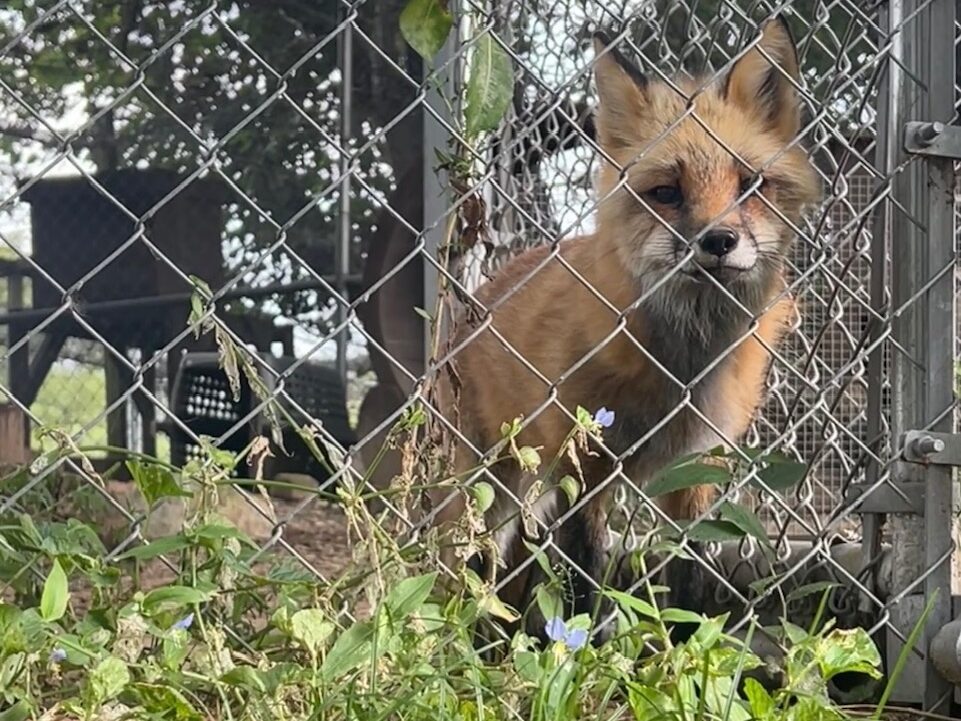
Our foxes LOVE shredding things.
After delivering their enrichment, I prepare their food for the next day if someone else hasn’t already gotten to it. Sometimes there is time to tackle another task, like cleaning the breakroom refrigerator, starting dishes, or helping with perimeter checks.
Then, it is finally time for lunch at home.
Meal prepping has honestly been my saving grace here. I am so glad I took the time to prepare meals ahead of time because some days are busy, and being able to come home and quickly eat before returning to the park has made my schedule much easier.
After lunch, I head back to the Animal Care Center for evening welfare checks, which are similar to my morning rounds, followed by cleaning tasks. Sometimes there are wolf diet buckets to wash or water buckets that need cleaning because the heat and moisture can cause algae to grow.
And then, before I know it, another day is done.
I’m so thankful that after 30 days, I am feeling much more confident in animal care and grounds work. I still have a few more skills and responsibilities to be tested on, but I’m making amazing progress.
I also passed my practice tour speech the other day!
Hopefully, I will be able to give a real tour soon.
Thirty days ago, everything felt new. I was learning where to go, what to do, and how to navigate the daily routines of the park. Now, I’m starting to recognize individual personalities, notice behavioral differences, move more confidently through my rotations, and understand the rhythm of animal care.
I still have so much to learn.
But for the first time, I’m starting to feel like I’m finding my place here. Yay for 30 days!
And I think that is one of the most rewarding parts of this experience so far.
Leave a Reply